


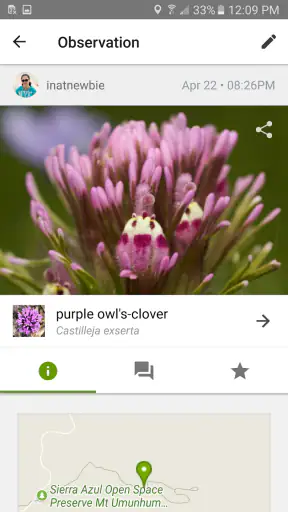
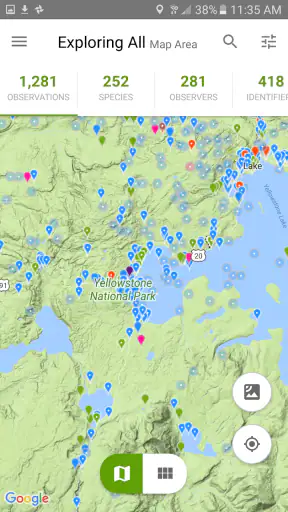
I like apps that turn an ordinary walk into a reason to pay closer attention, and iNaturalist does exactly that through one focused capability: helping me observe and identify plants and animals while connecting those observations with other people. It is a free education app from iNaturalist, available for everyone, and its appeal is much more practical than a simple reference guide. Instead of asking me to recognize a species from memory, it gives me a way to investigate what I have found and keep the moment attached to a real place, image, and date.
That approach makes it feel different from a traditional field guide. A book gives me information before I go outside; this app begins with the living thing in front of me. I can photograph an unfamiliar leaf, insect, bird, or other organism, explore possible identifications, and learn through comparison. The result is not always instant certainty, but it is a more active form of learning. I am not merely reading a description. I am making an observation, checking possibilities, and deciding how much confidence the evidence deserves.
Identification becomes a shared learning process
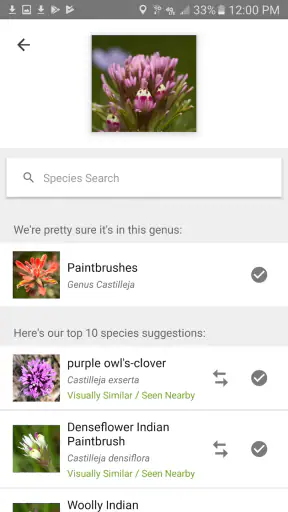
The central strength of iNaturalist is that identification is not treated as a magic button. The app helps me move from “What is this?” to a more useful sequence of questions: What characteristics can I see? Which suggestions fit the location and appearance? Do other observers agree? Is the image clear enough to support a confident conclusion? That process matters because nature rarely presents itself like a clean illustration in a guidebook.
When I point the app at a plant or animal, the suggested result is best understood as a starting point for investigation. A photograph may show a flower but hide the leaves, stem, underside, or surrounding habitat. An insect may be facing the wrong direction, partly obscured, or too small in the frame. iNaturalist is valuable because it encourages me to work with those imperfections rather than pretending that every photograph can produce a flawless answer.
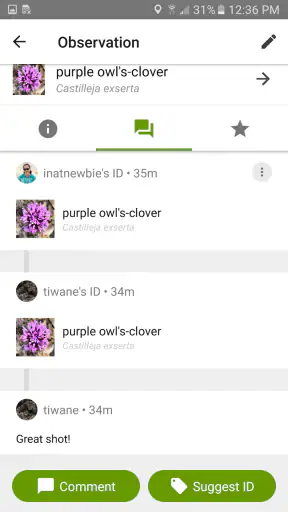
The social element changes the experience in an important way. Other people can contribute to the identification process, which means an observation can become a small conversation instead of a private guess. For a beginner, that is less intimidating than trying to master a complete taxonomy alone. For a more experienced naturalist, it offers a way to compare observations and notice details that might otherwise be overlooked.
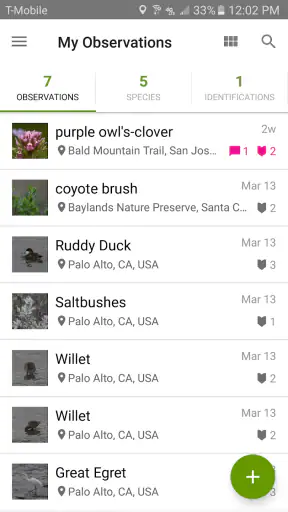
I also appreciate that the app makes curiosity cumulative. A single walk may produce only a few interesting finds, but those finds stay connected to my broader interest in local wildlife. Over time, I can look back at what caught my attention and recognize patterns in the places I visit. That is a stronger educational loop than opening a general search engine, reading one answer, and forgetting it a few minutes later.
What happens when an identification is difficult
The most important practical lesson is to photograph with identification in mind, not just with the goal of taking a pretty picture. For a plant, I would try to capture the whole form first, then take closer images of the flower, leaves, bark, or fruit. For an animal, a clear side view can be more useful than a dramatic but distant shot. I would also keep the subject in context when that context helps distinguish similar species.
This is one of the app’s less obvious strengths: it teaches observation technique without presenting itself as a formal course. After a few uncertain results, I naturally start asking which missing detail prevented a better identification. I begin taking more than one image, checking the focus, and looking for features that separate similar organisms. The app therefore improves not only what I know, but also how I look.
There is a trade-off here. Someone expecting a camera app that always names an organism immediately may become frustrated. Nature identification is genuinely difficult, and a photograph can be misleading. The useful habit is to treat the first suggestion as a hypothesis. If the answer matters, I would compare the visible traits, inspect the alternatives, and wait for community feedback rather than presenting an uncertain guess as fact.
That caution is especially important for mushrooms, insects, wild berries, and plants that might be handled or eaten. I would never use a visual suggestion from an app as the sole basis for a safety decision. iNaturalist is excellent for learning and documenting, but it should not replace expert advice when a wrong identification could cause harm.
A realistic afternoon in the park
Imagine taking a weekend walk through a local park with a friend or a child. Instead of trying to complete a formal lesson, we could choose one small area and photograph whatever we notice: a weed growing beside a path, a beetle under a leaf, a bird perched near the water, or a lichen on a wall. Each observation creates a reason to pause. We would discuss what we can see before checking the app, then compare our guesses with the suggested possibilities.
The shared aspect works particularly well in this situation. A child who normally loses interest after a few minutes has a simple task: find something, photograph it, and see what it might be. An adult can add the more valuable follow-up questions. Why is this organism in this habitat? What feature separates it from a similar one? Would the answer change if the image were taken in another season? The app becomes a prompt for conversation rather than a substitute for it.
I would also use the app for a more focused walk. Instead of recording everything, I might look only for flowering plants, pollinators, or organisms living on old trees. Narrowing the theme makes the activity less overwhelming and helps me notice relationships between species and habitat. This is where the education category feels justified: the app supports a method of learning through repeated, direct encounters with the natural world.
For families, schools, and informal nature groups, the strongest benefit is that the activity can scale to different levels. A beginner can concentrate on taking a clear photograph. A curious teenager can compare similar species. Someone with more experience can contribute careful identifications and explain the reasoning behind them. Everyone can participate without needing the same background knowledge.
Why the community matters more than a normal search
A normal web search is often faster when I already know the name or can describe the organism precisely. If I search for “small yellow flower,” I may receive a huge mixture of results, many of which are irrelevant to my location. A conventional field-guide app can be more structured, but it may require me to browse categories or recognize technical features before I know what to look for.
iNaturalist reverses that order. I start with an observation, then use visual suggestions and community input to narrow the possibilities. That is particularly useful when I have no vocabulary for what I am seeing. The app does not make the natural world simple, but it gives me a practical entry point into its complexity.
The community also introduces a kind of accountability that a private identification tool lacks. When an observation is open to review, I am encouraged to be more precise about what I actually photographed. I become less likely to choose an exciting species just because it sounds interesting. In my experience, that shift from guessing to documenting is one of the app’s most meaningful effects.
It is worth remembering that community participation can vary by organism and location. A common plant in a well-observed area may receive more useful attention than an obscure species in a remote place. That does not make the observation pointless, but it means the app should not be judged only by how quickly another person confirms an identification. Its value also lies in the record I create and the skills I develop while making it.
Where the experience has friction
The interface is most rewarding when I am outdoors and willing to slow down. It is less satisfying if I want a polished encyclopedia with long, carefully organized explanations for every result. The app’s identity is built around observations and participation, so the learning experience can feel uneven. Some discoveries lead to helpful exploration, while others require me to do more interpretation on my own.
Image quality is another real limitation. A blurry photograph, poor lighting, or an incomplete view can send the identification in the wrong direction. I have found that taking a second image from a different angle is often more useful than repeatedly checking the same weak photograph. This is a small workflow change, but it makes the app feel much more dependable.
There is also a difference between identifying something and understanding it. A species name is a doorway, not the whole lesson. If I stop after reading the name, I have gained a label but not necessarily much knowledge. The best results come when I use the identification to investigate the organism’s visible traits, habitat, and relationship to the place where I found it.
People who dislike social features may find the community side unnecessary, but I think that would mean missing the app’s most distinctive quality. The shared review process is not just decoration around a recognition tool. It changes how I record what I see and makes uncertainty acceptable. Still, users who want a completely private, offline-first field notebook may prefer a simpler note-taking or field-guide app.
Device compatibility is broad enough for many older phones, since the app requires Android 6.0 or later. The current version is 1.38.2, so I would still check that an older device has enough room and performs comfortably before planning a long recording session. That is not a criticism of the concept, but outdoor apps are more enjoyable when the camera opens quickly and the phone remains usable in changing conditions.
Who will get the most from it
I would recommend iNaturalist most strongly to people who learn by doing. It suits curious walkers, gardeners, parents looking for a constructive outdoor activity, students beginning to explore biology, and anyone who repeatedly asks about the plants and animals near home. It is also a good fit for travelers who want to pay attention to local nature instead of treating a landscape as background scenery.
Beginners should not worry about lacking scientific vocabulary. The app is useful precisely because it lets an image begin the conversation. My advice would be to start with easy-to-photograph subjects and accept that some results will remain uncertain. That mindset turns mistakes into practice rather than disappointment.
More experienced observers can use it differently. They may care less about the first suggested name and more about creating careful records, comparing observations, or helping others distinguish similar organisms. The app rewards patience and good documentation, so it can remain useful after the novelty of visual recognition fades.
I would skip it if my only goal were instant answers with no interaction, or if I needed authoritative confirmation for a medical, legal, or safety-sensitive decision. I would also choose a specialized field guide when I already know the region and subject I want to study in depth. A focused guide may offer more systematic reference material, while iNaturalist is better at helping me discover and investigate the unexpected.
The app is free, which removes the biggest barrier to trying this style of learning. Its Everyone age rating also makes it easy to consider for shared family exploration, provided adults explain that an identification suggestion is not permission to touch, collect, eat, or approach wildlife. The best use is curious but respectful observation.
My final view after using the identification workflow
iNaturalist succeeds because it makes identification part of an observation habit rather than an isolated search. Its most valuable feature is not simply recognizing a plant or animal; it is the way recognition leads to better photographs, better questions, and sometimes useful input from other observers. That chain gives the app lasting educational value.
The service has reached more than five million installs and holds an average rating of 3.9 from around twelve thousand ratings, which suggests a substantial audience with mixed but generally meaningful engagement. Those figures do not change my personal conclusion: the app is strongest when I approach it as a learning companion, not as an infallible scanner.
Since its release on December 30, 2011, it has occupied a distinctive space between a nature journal, a visual identification aid, and a community activity. I would install it before a walk, keep my expectations realistic, and take several thoughtful images instead of relying on one rushed snapshot. If you are willing to slow down and investigate what you see, this is one of the most rewarding free education apps for turning everyday nature into an ongoing practice of noticing.


